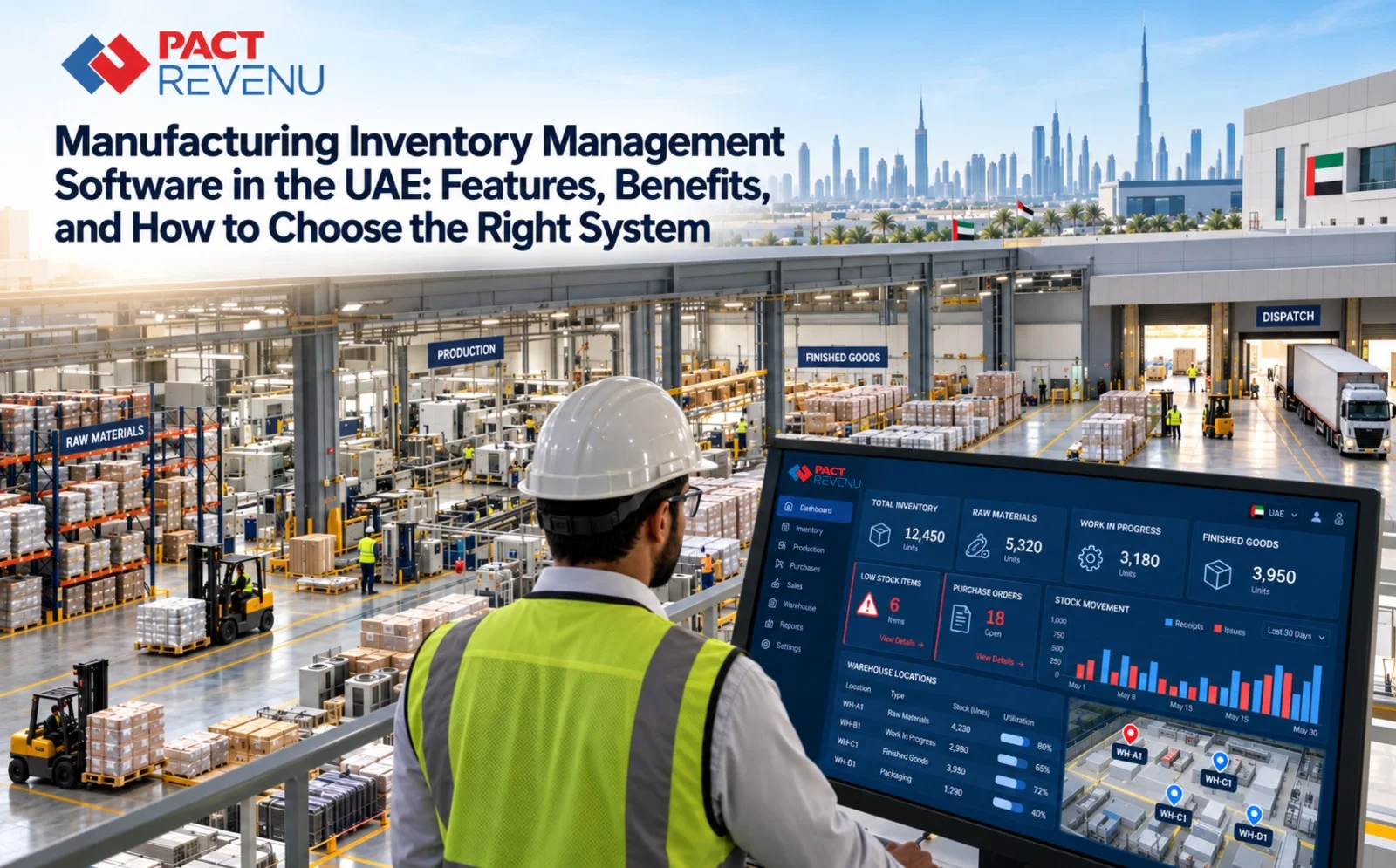
Manufacturing Inventory Management System in the UAE: Features, Benefits, and How to Choose the Right System
Manufacturing businesses in the UAE operate in a competitive environment where efficient production, accurate stock records, and timely deliveries are essential for growth. Whether a company manufactures food products, industrial equipment, packaging materials, building supplies, or consumer goods, managing inventory effectively can directly influence its operating costs and customer satisfaction.
However, many manufacturers still rely on spreadsheets, disconnected systems, or manual stock updates. These methods can make it difficult to track raw materials, monitor work-in-progress, manage finished goods, and identify stock shortages before they affect production.
A Manufacturing Inventory Management System helps businesses manage these activities through a more organised and connected process. By improving inventory visibility and connecting stock information with purchasing, production, and sales, manufacturers can make informed decisions and reduce avoidable delays.
Choosing the best inventory management system can be a crucial first step toward improved company management for UAE businesses looking to increase operational efficiency. This guide explains the essential features, benefits, and selection criteria to consider when investing in manufacturing inventory software.
What Is a Manufacturing Inventory Management System?
Technology for monitoring and controlling the items and materials used in standard manufacturing procedures is called a manufacturing inventory management system. Throughout the production cycle, it assists businesses in keeping an eye on components, raw materials, work-in-progress products, and completed things.
Instead of maintaining separate stock records across different departments, businesses can use a centralised system to maintain more consistent inventory information.
For example, when a manufacturing company receives a raw material shipment, the system can record the received quantity and update available stock. When materials are issued for production, inventory records can be adjusted accordingly. Once production is completed, finished goods can be recorded and prepared for dispatch.
Bar code scanning, batch and lot tracking, warehouse management, purchase planning, and reporting on inventory may also be supported by the system, depending on the program.
For manufacturers in the UAE, these capabilities can help improve coordination between procurement, warehouse, production, finance, and sales teams.
Why UAE Manufacturers Need Inventory Management Software
The UAE manufacturing sector includes businesses with different production models, supply chains, and inventory requirements. Companies may source materials locally or internationally, manage multiple warehouses, and fulfil orders for customers across the Emirates and overseas markets.
Without reliable inventory information, businesses may face several operational challenges.
1. Prevent Production Delays
A production schedule can be disrupted when essential materials are unavailable at the required time. Manual stock records may not provide an accurate picture of current availability or upcoming material requirements.
Inventory software helps teams monitor stock levels and identify potential shortages earlier. When integrated with production planning, it can support better material allocation and purchasing decisions.
2. Reduce Excess and Slow-Moving Stock
Holding too much inventory can tie up working capital, increase storage costs, and create risks when materials expire or become obsolete.
A suitable system helps businesses review stock movement, identify slow-moving items, and establish appropriate reorder levels. This enables purchasing teams to make decisions based on actual requirements rather than assumptions.
3. Improve Warehouse Accuracy
When inventory is stored across multiple locations, maintaining accurate stock records becomes more challenging. A connected inventory system can help warehouse teams track quantities, storage locations, receipts, and material movements.
More accurate information reduces the time employees spend searching for materials or correcting stock discrepancies.
4. Support Better Customer Service
Users expect orders to be delivered within the periods agreed upon. When finished goods are unavailable or stock records are faulty, organisations might find it challenging to meet delivery deadlines.
With improved stock visibility, sales and operations teams can make more informed decisions about product availability, order fulfilment, and production priorities.
Essential Features of Manufacturing Inventory Software
Before investing in a solution, manufacturers should understand which features can address their day-to-day operational challenges.
1. Real-Time Inventory Tracking
Real-time or promptly updated stock information helps businesses understand what is available, reserved, in production, or ready for dispatch.
A centralised inventory view can reduce dependence on repeated manual checks and help teams respond more quickly to changes in demand.
2. Raw Material and Finished Goods Management
Manufacturers need to track different inventory categories throughout the production process. The software should support raw materials, components, work-in-progress, and finished products.
This allows teams to understand how materials move through production and how much finished stock is available for customer orders.
3. Bill of Materials (BOM) Management
A Bill of Materials defines the components and quantities required to manufacture a product.
For example, a furniture manufacturer may need wood panels, fasteners, adhesives, and finishing materials to produce a table. BOM functionality helps organise these requirements and supports material planning.
When connected to production planning, it can help identify material shortages before manufacturing begins.
4. Reorder Levels and Stock Alerts
Reorder notifications help purchasing teams identify when inventory approaches a predefined minimum level.
A more advanced solution may support demand forecasting, lead-time planning, and suggested purchase quantities. These functions help businesses balance material availability with storage costs.
5. Batch, Lot, and Expiry Tracking
Batch and lot tracking can be important for manufacturers handling food products, chemicals, pharmaceuticals, or other materials requiring traceability.
The system should allow businesses to record relevant batch details and trace materials through receiving, production, and dispatch.
Where expiry dates apply, expiry monitoring can help teams follow stock rotation procedures and reduce avoidable waste.
6. Multi-Warehouse Inventory Management
Manufacturers with multiple warehouses or storage locations need a clear view of stock across their operations.
Multi-location functionality helps track inventory transfers, location-specific quantities, and material availability. This can support better coordination between production facilities, distribution centres, and storage areas.
7. Reporting and Analytics
Inventory reports help managers review stock movement, consumption patterns, shortages, valuation, and slow-moving products.
Useful reports should provide actionable information rather than simply display large volumes of data. Managers can use these insights to improve purchasing decisions, evaluate inventory performance, and plan future production requirements.
Benefits of Using ERP for Manufacturing
Standalone inventory software can address basic stock control requirements. However, businesses managing complex operations may benefit from an integrated ERP system.
ERP for manufacturing connects inventory with other business functions, depending on the modules and configuration available.
Better Coordination Across Departments
When inventory, procurement, production, sales, and finance use connected information, employees can spend less time reconciling separate records.
For example, a sales order may influence production requirements, while material availability helps determine whether the order can be fulfilled on schedule.
Improved Cost Control
An integrated system can help businesses monitor material consumption, purchasing costs, and inventory valuation. When combined with production costing, it can provide better visibility into the cost of manufacturing products.
This information supports more informed pricing, budgeting, and profitability analysis.
More Efficient Production Planning
Production teams need to know whether the required materials are available before starting a manufacturing order.
An integrated solution can connect bills of materials, stock availability, and production schedules to support more realistic planning and reduce avoidable interruptions.
Stronger Business Reporting
Management can review operational information across departments instead of relying on disconnected spreadsheets.
The quality of these insights depends on accurate data, appropriate configuration, and consistent use of the system.
How to Choose the Right Inventory Management Software for Manufacturing
Selecting the right solution requires more than comparing prices or counting features. Manufacturers should evaluate how well the software fits their actual business processes.
1. Identify Your Current Inventory Challenges
Start by documenting the problems your business wants to solve.
These might include frequent stock discrepancies, delayed material purchases, excess inventory, limited batch traceability, or difficulty managing multiple warehouses.
Prioritise the issues that affect production efficiency, costs, and customer commitments. This creates a practical foundation for comparing software options.
2. Check Manufacturing-Specific Functionality
Not every inventory application is designed for manufacturing environments.
Check whether the solution supports your production model, material planning, BOM management, work-in-progress tracking, stock transfers, and reporting requirements.
If your operations involve complex production processes, determine whether additional manufacturing or ERP modules are necessary.
3. Evaluate Integration Capabilities
Consider how the inventory system will connect with accounting, purchasing, sales, production planning, and warehouse operations.
Integrated data can reduce duplicate entries and improve coordination. Ask vendors to demonstrate the complete workflow rather than showing individual features in isolation.
4. Consider UAE Business Requirements
UAE manufacturers should assess whether the software can support their invoicing, accounting, tax reporting, and multi-currency requirements where applicable.
If the system handles VAT-related financial information, confirm that its capabilities align with current UAE requirements and your business processes.
Businesses operating across different Emirates or international markets should also evaluate multi-entity reporting, foreign-currency transactions, and inter-warehouse transfers if these are relevant to their operations.
5. Review Usability and Scalability
The software should be practical for warehouse employees, production supervisors, purchasing teams, and managers.
Request a demonstration using realistic business scenarios. Check how easily users can receive materials, issue stock, record production output, and generate reports.
Also consider whether the solution can accommodate future warehouses, product lines, users, and business locations without requiring an entirely new system.
6. Understand Implementation and Support
Successful implementation involves more than installing software. It may require data migration, inventory cleanup, process configuration, employee training, testing, and ongoing support.
Ask the provider about implementation timelines, training options, technical support, system updates, data backup, and access controls.
A clear implementation plan helps employees adapt to the new system and reduces disruption during the transition.
7. Compare Total Cost of Ownership
Evaluate subscription or licence fees alongside implementation, customisation, training, integration, and ongoing maintenance costs.
The lowest initial price may not provide the best long-term value if essential features require expensive additions.
Compare each option against your business requirements, expected operational improvements, and available budget.
Is Cloud-Based Inventory Software Right for Your Manufacturing Business?
Cloud-based inventory software allows authorised users to access inventory information through an internet-connected system, subject to the provider’s access controls and service availability.
For UAE manufacturers operating across multiple locations, this can simplify access to shared inventory records and support coordination between office, warehouse, and production teams.
Cloud solutions may also reduce the need to maintain on-site infrastructure, although costs and responsibilities vary by provider.
Before choosing a cloud platform, review its security controls, user permissions, backup policies, data hosting arrangements, integration capabilities, and service availability commitments.
Some businesses may prefer on-premises or hybrid deployment because of specific operational, regulatory, or infrastructure requirements. The best option depends on the organisation’s needs and IT policies.
How PACT REVENU Can Support Manufacturing Inventory Management
PACT REVENU offers business software solutions designed to help organisations manage and connect important operational processes.
For UAE manufacturers evaluating inventory management software, the right solution should support better stock visibility, organised purchasing, production coordination, and business reporting according to their requirements.
When assessing PACT REVENU, businesses can discuss their current inventory processes, warehouse structure, manufacturing workflows, and integration needs to understand which capabilities and configurations are suitable.
The goal is to select a system that addresses real operational challenges while supporting future business growth.
Conclusion
Efficient inventory management helps UAE manufacturers maintain production continuity, control stock levels, and respond to customer demand more effectively. Manual processes may be sufficient for simple operations, but growing businesses often need better visibility and stronger coordination between inventory, purchasing, production, and finance.
A suitable Manufacturing Inventory Management System can help reduce stock discrepancies, identify shortages, improve traceability, and support more informed decisions. When these capabilities are connected through ERP for manufacturing, businesses can gain a broader view of their operations.
Before choosing a solution, assess your business requirements, compare manufacturing-specific features, review integration options, and evaluate implementation support.
Looking to improve inventory control in your manufacturing business? Contact PACT REVENU to discuss your requirements and explore a suitable inventory management solution for your UAE operations.
Frequently Asked Questions
1. What is a Manufacturing Inventory Management System?
A Manufacturing Inventory Management System is software that tracks raw materials, components, work-in-progress, and finished goods. It helps manufacturers maintain accurate stock records, monitor material movements, and plan inventory requirements.
2. What features should manufacturing inventory software include?
Important features include real-time stock tracking, BOM management, reorder alerts, batch tracking, multi-warehouse management, material planning, and inventory reporting. The right features depend on the company’s production processes and operational needs.
3. How does inventory management software help UAE manufacturers reduce costs?
It can help businesses identify excess stock, reduce stock discrepancies, improve purchasing decisions, and prevent avoidable production delays. Actual savings depend on inventory accuracy, system configuration, and how consistently employees use the software.
4. What is the difference between inventory software and ERP for manufacturing?
Inventory software primarily focuses on stock control and material movement. ERP for manufacturing can connect inventory with purchasing, production, accounting, sales, and other business functions, depending on the modules included.
5. How can I choose the right manufacturing inventory software in the UAE?
Identify your main inventory challenges, check manufacturing-specific features, assess integration and UAE business requirements, and compare implementation costs and support. Request a demonstration using your actual workflows before making a decision.