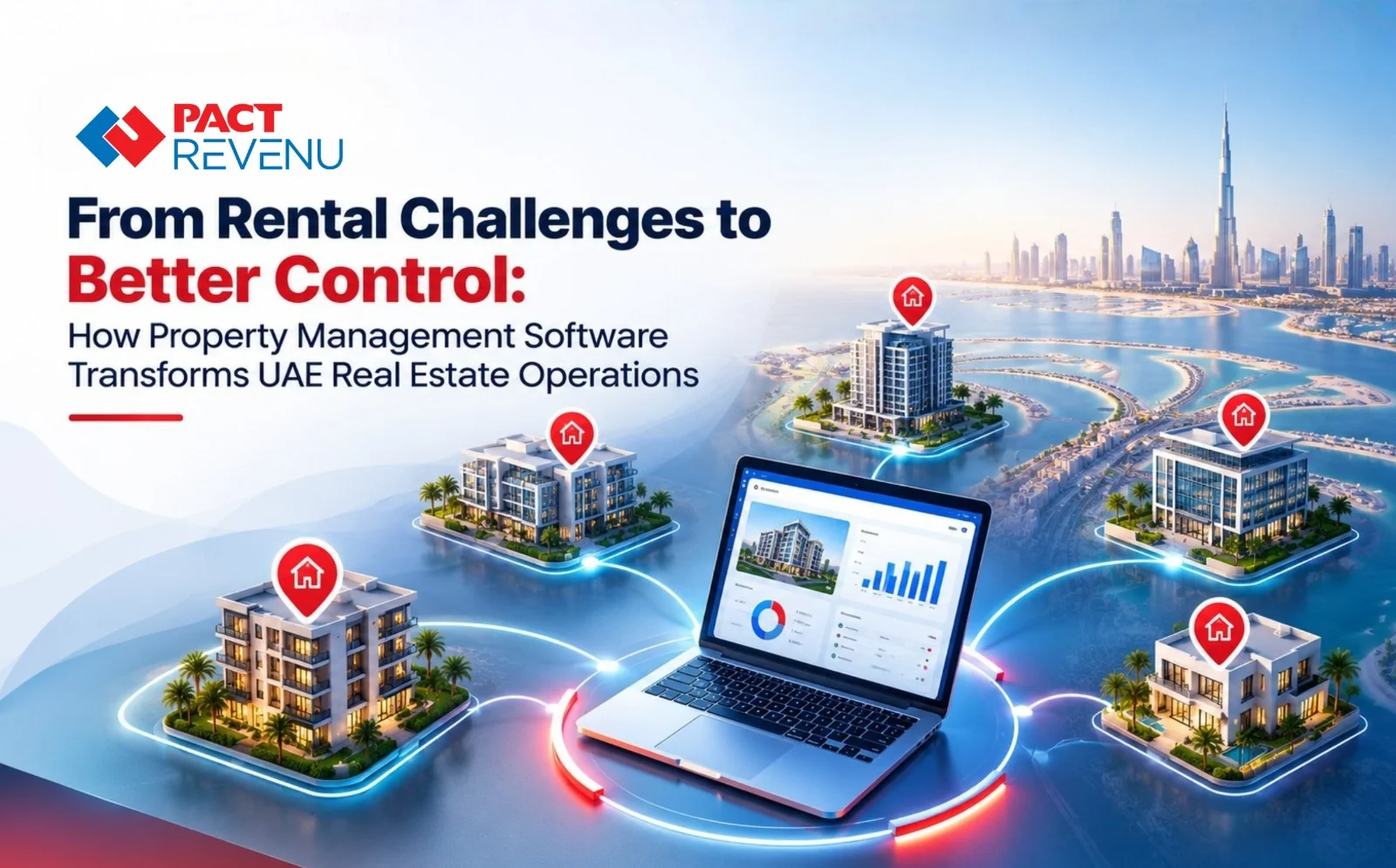
From Rental Challenges to Better Control: How Property Management Software Transforms UAE Real Estate Operations
Managing rental properties in the UAE can look simple from the outside. You collect rent, renew leases and fix what breaks. In practice, owners and operators handle dozens of moving parts at once: tenants on different payment schedules, leases expiring in different months, maintenance calls arriving through WhatsApp and financial records spread across spreadsheets. This is where property management software gives businesses a single, organised system to work from instead of scattered files and memory.
This article covers the rental challenges UAE landlords and real estate businesses face most often, the practices that help and how digital tools bring better visibility and control.
Common Rental Management Challenges in the UAE
Most operational problems come from the same source: information lives in too many places. A landlord with a handful of units and a company with hundreds of units both run into similar issues, only at different scales.
Typical challenges include:
- Scattered records: Tenant details, lease copies and payment history stored across email, paper files and spreadsheets.
- Delayed or missed follow ups: Overdue rent noticed late because nobody is tracking due dates in one place.
- Renewal oversights: Leases expiring without timely conversations about renewal or rent review.
- Slow complaint handling: Tenant requests passed along informally, with no record of who is responsible.
- Limited financial clarity: Difficulty seeing income, expenses and outstanding amounts per property at a glance.
Managing Multiple Rental Properties and Tenants
Running one apartment is a side task. Running ten, or a mixed portfolio of villas, apartments and commercial units, becomes an operations job. Each property has its own tenant, lease terms, maintenance history and cost profile.
Consider an investor who owns units in several communities. Without a central view, answering a basic question like “which tenants are overdue this month?” means opening several files and cross checking manually. A structured system answers it in seconds and shows the full picture per property or per tenant.
Rent Collection, Payment Tracking and Rental Records
Rent collection is the clearest place to see the value of organised tracking. When payment dates, amounts and statuses sit in one record, owners can see what has been received, what is pending and what is overdue without reconciling by hand.
Good practice here includes:
- Recording every payment against the correct tenant, unit and lease period.
- Setting reminders ahead of due dates, not after them.
- Keeping payment receipts and history easy to retrieve for owner reporting or disputes.
- Separating rent income from other charges so reports stay accurate.
Lease Agreement Management and Renewal Reminders
A lease management process should answer three questions at any time: who is the tenant, what are the terms and when does the lease end? Keeping lease documents with their key dates attached prevents the common problem of discovering an expiry too late to plan.
Useful habits include storing digital copies of agreements beside the tenant record, tracking start and end dates and setting renewal reminders well in advance. That lead time lets the landlord review rent, discuss renewal with the tenant or begin marketing the unit if it will become vacant. Always verify current tenancy rules and documentation requirements with the relevant UAE authorities or a qualified advisor, since these should not be handled from memory.
Tenant Communication and Complaint Management
Tenants usually stay longer when issues are handled promptly and transparently. Informal channels work until volume grows, then requests get buried.
A reliable approach is to log every complaint with a date, a category and an owner, then track it to closure. This helps in two ways: tenants get consistent responses and managers can spot patterns, such as repeated air conditioning issues in one building, that point to a deeper problem.
Property Maintenance Requests and Service Coordination
Maintenance is where tenant satisfaction and cost control meet. A typical scenario: a tenant reports a leak, the manager calls a contractor and nobody records the visit or the cost. Months later, the owner asks what was spent on that unit and no one can say.
Better practice looks like this:
- Record each request with unit, issue, priority and date.
- Assign it to a specific vendor or technician.
- Track status from reported to completed.
- Link the final cost to the property’s expense record.
Financial Tracking, Reporting and Expense Management
Owners and investors want clear answers: how much rent came in, what was spent and what remains outstanding. When income and expenses are recorded as they happen in a financial management system, reports become a by product of daily work instead of a month end scramble.
Property wise reporting is especially useful for portfolios. It shows which units perform well and which carry high maintenance or vacancy costs, so decisions are based on records rather than impressions.
Challenges Faced by Property Management Companies
Property management companies carry an extra layer of responsibility because they handle other people’s assets and money. Their pressure points include:
- Maintaining accurate, separate records for each owner and property.
- Producing timely statements for owners.
- Coordinating staff, vendors and tenants without losing track of requests.
- Scaling operations without adding proportional administrative headcount.
For small and mid sized property management companies in particular, manual processes become a ceiling on growth. Every new property adds more admin work unless the process itself becomes more organised.
How Small Landlords Can Simplify Daily Rental Activities
Yes, small landlords can benefit from structured tools and they often feel the time savings first. Someone managing a few units typically does everything personally: chasing rent, replying to tenants, arranging repairs and tracking costs. Property management software for small landlords replaces that mental checklist with one place for tenants, leases, payments and requests, so nothing depends on remembering a date.
How Property Management Software Improves Rental Operations and Business Control
Property management software centralises tenant, lease, payment, maintenance and financial information so that owners and managers can see and act on the full picture. Instead of managing each task separately, teams work from shared records.
In practical terms, a digital system helps businesses:
- See rent status, upcoming lease expiries and open requests in one view.
- Reduce dependency on individual employees’ memory or personal files.
- Keep a clear audit trail of payments and communication.
- Generate property wise and owner wise reports faster.
- Maintain consistent processes as the portfolio grows.
Real property management software focuses on these operational realities: collecting rent, tracking leases, coordinating service and reporting finances. It is not just a database of addresses.
What to Look for in the Best Property Management Software
Rather than chasing feature lists, evaluate against your actual workflow. Ask whether the system handles:
- Tenant and lease records with date based reminders.
- Rent and payment tracking with clear status.
- Maintenance request logging and follow up.
- Financial reports by property and owner.
- Ease of use for your team, since adoption decides success.
Best Practices for Improving Rental Property Operations
- Keep one source of truth for tenant, lease and payment data.
- Set reminders for rent and renewals before they are due.
- Log every maintenance request and tie costs to the property.
- Review reports monthly to catch problems early.
- Standardise processes so they do not depend on one person.
Conclusion: Better Control with PACT REVENU
Rental management challenges in the UAE rarely come from lack of effort. They come from information scattered across too many places. When rent tracking, lease dates, tenant requests and financial records are connected, owners and operators gain the visibility they need to act early and run properties with confidence.
PACT REVENU is a practical technology solution for real estate businesses that want that level of control. Its property management software helps landlords, investors and property management teams organise rental operations in one system, from tenant and lease records to payment tracking and reporting. Whether you manage a few units or a growing portfolio, a structured approach to property management software makes daily work more predictable.
Ready to simplify your rental operations? Explore PACT REVENU or get in touch to discuss your property management requirements.
Frequently Asked Questions
1. What is property management software?
It is a digital system that stores and organises rental information such as tenants, leases, payments, maintenance requests and financial records. It helps landlords and real estate businesses track activity, reduce manual work and monitor property performance from one place.
2. How does software simplify rental property management?
It replaces scattered spreadsheets and paper files with connected records. Reminders for rent and renewals, logged maintenance requests and ready reports mean fewer missed follow ups and less time spent searching for information.
3. Can small landlords use property management software?
Yes. Property management software for small landlords suits owners with a few units who handle everything personally. A single system for tenants, payments and requests reduces admin effort and lowers the chance of missed dates.
4. What features should businesses look for in a property management solution?
Look for tenant and lease records, rent tracking, renewal reminders, maintenance logging and property wise financial reporting. The best property management software is one your team finds easy to use and that fits how you actually work.
5. How can property management companies improve rental operations using software?
Property management companies can centralise owner, tenant and property records, standardise service workflows and produce statements faster. This reduces reliance on individual staff and makes it easier to take on more properties without proportionally more administration.