
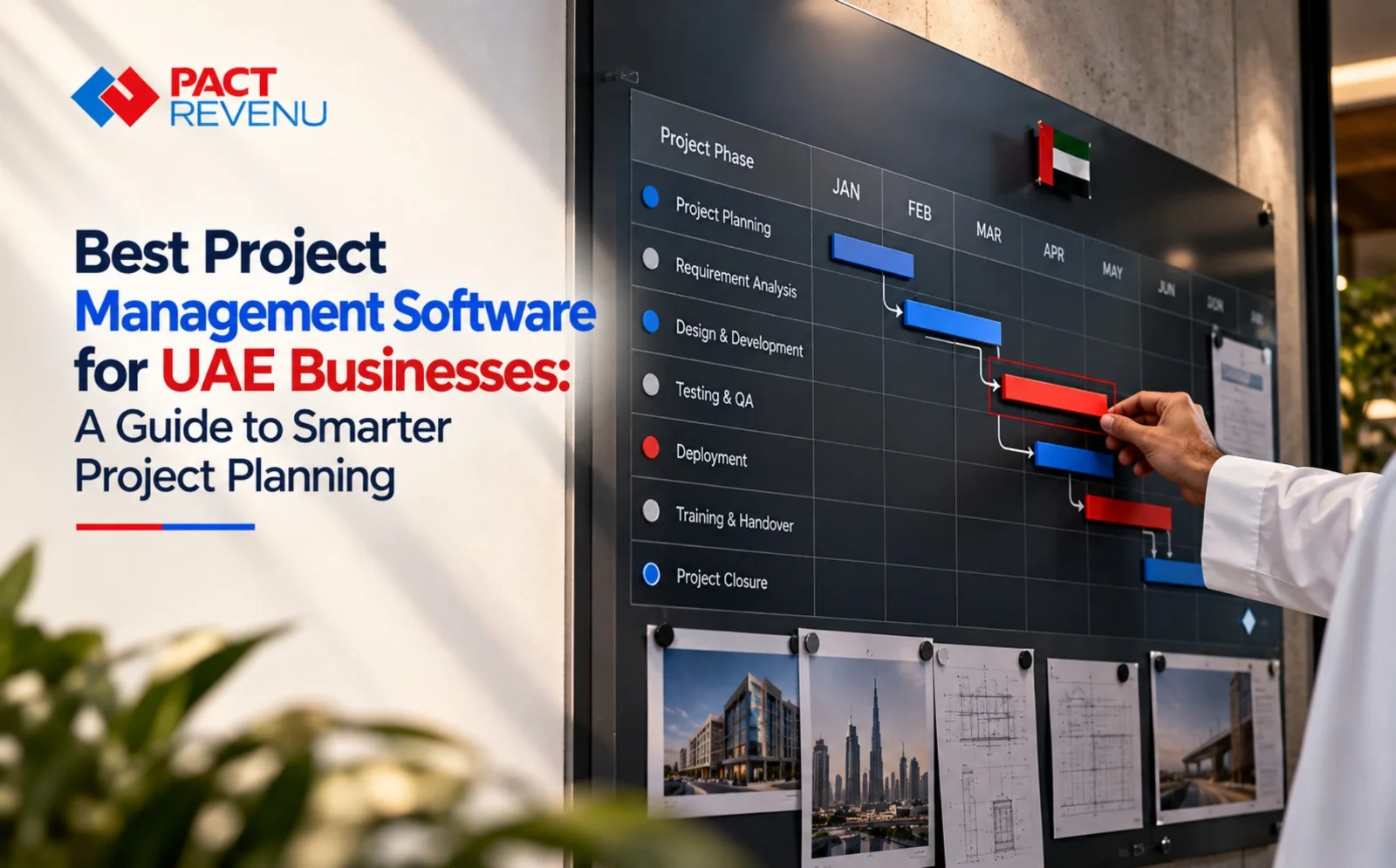
Best Project Management Software for UAE Businesses: A Guide to Smarter Project Planning
Project management software helps UAE businesses plan tasks, assign responsibilities, monitor deadlines, manage resources and coordinate teams from a central platform. It gives managers better visibility into ongoing work and helps departments stay aligned, particularly when projects involve multiple locations, teams, clients and changing priorities.
Why Do UAE Businesses Need Project Management Software?
Businesses across the UAE often manage several projects at the same time. A construction company may coordinate contractors and suppliers, while an IT services provider may handle multiple client assignments with different delivery schedules.
Managing these activities through spreadsheets, emails and separate communication tools can make it difficult to maintain consistent project information.
The right project management software can help businesses:
- Organize projects and break them into manageable tasks.
- Assign responsibilities to employees and departments.
- Monitor deadlines and project progress.
- Coordinate teams working across different Emirates.
- Manage resources and workloads.
- Maintain project documents in an organized location.
- Identify delays and address issues earlier.
However, selecting a solution requires more than comparing software features. Businesses should consider their project complexity, team structure, existing systems and future operational requirements.
10 Essential Features to Look for in the Best Project Management Software
The best project management software should support the way an organization plans, assigns, monitors and completes its work. Not every business requires the same capabilities, so decision makers should prioritize features based on their operational needs.
1. Task and Project Planning
Effective project planning begins with clearly defined objectives, tasks, responsibilities and expected completion dates.
A suitable system should allow project managers to divide larger projects into smaller activities and organize them according to priorities and dependencies.
For example, a real estate development company in Dubai may need to coordinate property design, approvals, construction activities, inspections and handover preparation. Organizing these activities within a structured project plan can help managers understand what needs to happen at each stage.
When evaluating the best project software, check whether it supports:
- Project creation and task breakdown.
- Milestone planning.
- Task dependencies.
- Priority settings.
- Project timelines.
These capabilities can help teams establish a clearer direction before work begins.
2. Task Assignment and Team Collaboration
Projects often involve employees from different departments, external partners and clients. Without clear responsibility, tasks can be delayed or overlooked.
Task assignment capabilities help managers allocate work to specific employees or teams. Collaboration features may also allow employees to share updates, discuss tasks and communicate relevant information.
Consider an engineering company operating between Abu Dhabi and Dubai. Its design team may work from one location while site engineers and project coordinators operate elsewhere. A centralized platform can help employees access relevant task information and coordinate their responsibilities.
Look for:
- Individual task ownership.
- Comments and discussions.
- Task notifications.
- Shared team updates.
- Role based access, where available.
Clear task ownership can reduce confusion and improve coordination between departments.
3. Project Scheduling and Deadline Management
Project schedules help businesses understand when activities should begin, how long they may take and when deliverables are expected.
This is particularly important for UAE businesses managing construction schedules, IT implementations, consulting assignments and retail projects with fixed launch dates.
Useful scheduling capabilities may include:
- Calendar based planning.
- Project timelines.
- Milestone deadlines.
- Recurring tasks.
- Dependency management.
- Deadline reminders.
For example, a retail business preparing to open a new branch in Sharjah may need to coordinate interior work, equipment installation, staff preparation and inventory arrangements.
A structured schedule helps managers identify overlapping activities and monitor upcoming deadlines.
4. Progress Monitoring and Project Management Tracking
Creating a project plan is only the beginning. Managers also need to understand whether work is progressing according to expectations.
Project management tracking helps teams monitor completed tasks, pending activities, delayed assignments and outstanding work.
Depending on the platform, progress monitoring may include task status boards, milestone updates, progress indicators and project dashboards.
For an IT services company handling several client projects, managers may need to review development progress, testing activities, pending approvals and delivery schedules.
A centralized tracking system can make these updates easier to review and help managers identify areas requiring attention.
5. Resource and Workload Management
Projects depend on people, equipment, budgets and available time. Assigning too many activities to the same employees can create workload pressure and affect delivery schedules.
Resource management helps businesses understand how available resources are distributed across projects.
Before selecting a system, check whether it supports:
- Employee workload visibility.
- Resource allocation.
- Team availability.
- Workload planning.
- Resource scheduling.
For example, an engineering consultancy working on multiple assignments may need to distribute technical employees across different projects. Understanding existing workloads can help managers make more informed allocation decisions.
Not every platform includes advanced resource planning, so businesses should verify this capability before selecting a solution.
6. Reporting and Project Performance Visibility
Project reports help managers understand the current status of work and identify areas that require attention.
Instead of collecting updates from multiple employees, reporting tools may provide a consolidated view of project activities.
Depending on the software, reports can cover:
- Completed and pending tasks.
- Project milestone status.
- Delayed activities.
- Employee workloads.
- Project timelines.
- Overall progress.
For a UAE manufacturing business, managers may need to coordinate production-related projects, equipment installation, maintenance planning and operational improvements.
Useful reporting can support management reviews and help decision makers understand project performance.
When comparing the best project management software, examine whether reports are customizable and whether managers can access information at the level they need.
7. File Sharing and Document Management
Project work involves many documents, including drawings, contracts, quotations, technical specifications, reports and client approvals.
When files are shared through separate email conversations or messaging platforms, employees may struggle to locate the correct version.
Document management capabilities can help teams organize project related information in a shared location.
Important considerations include:
- File attachments within tasks.
- Document organization.
- Access permissions.
- Version history, where supported.
- File sharing controls.
For example, a construction project may involve architects, engineers, contractors and consultants exchanging updated drawings and project documents.
Centralized document access can make it easier for authorized team members to find relevant information. Businesses should still establish document approval and version control procedures.
8. Workflow Automation and Task Prioritization
Many project activities involve repeated steps, such as assigning tasks, sending reminders, updating statuses and notifying responsible employees.
Workflow automation can reduce the need for some repetitive manual actions, depending on the platform’s capabilities.
For instance, an IT company may use automated notifications to remind employees about upcoming deadlines or alert managers when a task requires approval.
Useful capabilities may include:
- Automated task notifications.
- Recurring task creation.
- Status based workflows.
- Task prioritization.
- Approval notifications.
Automation should support existing business processes rather than introduce unnecessary complexity.
Businesses should also confirm which automation options are included in the software package they are considering.
9. Integration with Other Business Systems
Project information often connects with other business activities, including finance, accounting, customer relationship management, HR and document management.
When systems operate separately, employees may need to enter similar information in multiple places.
Integration capabilities can help businesses connect project activities with relevant business applications.
For example, a UAE consulting company may need project information alongside customer details, financial records and employee allocation data.
Before choosing a solution, consider:
- Accounting and finance integrations.
- CRM connectivity.
- HR and employee management systems.
- File storage applications.
- Available APIs and integration options.
Not all platforms support the same integrations. Businesses should confirm compatibility with their existing applications and understand whether additional configuration or third party services are required.
10. Scalability, Usability and Customization
A solution that works for a small team may not meet the requirements of a growing organization.
As businesses expand, they may manage more employees, projects, departments, clients and operational processes.
The best project software should align with the organization’s current requirements while allowing room for future changes.
Evaluate the following:
- Ease of use for employees and managers.
- Support for different team structures.
- Customizable project workflows.
- User access and permissions.
- Scalability as project volumes increase.
- Availability of training and technical support.
For businesses operating across Dubai, Abu Dhabi, Sharjah and other Emirates, the ability to maintain consistent project processes across locations may also be important.
A simple and usable system is more likely to gain employee acceptance than a complicated platform with features the business does not need.
Manual Project Management vs Software Supported Project Management
Many businesses begin managing projects using spreadsheets, emails and messaging applications. These methods can work for smaller projects, but managing several teams and activities through disconnected tools may become difficult as operations grow.
| Management Area | Manual Approach | Software Supported Approach |
| Task assignment | Tasks shared through emails or messages | Tasks organized and assigned centrally |
| Scheduling | Deadlines maintained in spreadsheets or calendars | Project timelines and scheduling tools |
| Progress updates | Employees provide separate updates | Updates can be recorded in project systems |
| Document access | Files distributed across different locations | Project related files can be organized centrally |
| Reporting | Information collected manually | Reports may be generated from recorded project data |
| Collaboration | Communication across multiple applications | Shared project information and collaboration tools |
Software supported management does not automatically eliminate project delays or communication problems. Businesses still need accurate information, clear responsibilities, standardized processes and consistent employee participation.
How Can Different UAE Industries Benefit from Project Management Software?
Project requirements vary depending on the industry, project size and operational structure.
Here are some practical examples of how different UAE businesses may use project management systems.
Construction and Engineering: Teams can organize project phases, coordinate site activities, assign responsibilities and monitor milestone deadlines.
Real Estate: Property developers and management companies can organize development activities, coordinate vendors and monitor maintenance or renovation assignments.
IT Services: Software development and IT support teams can manage client projects, assign technical tasks, monitor testing activities and track delivery schedules.
Manufacturing: Managers can coordinate equipment installation, process improvement projects, maintenance activities and operational assignments.
Consulting: Consulting firms can organize client deliverables, allocate employees, manage project timelines and monitor outstanding work.
Retail: Retail businesses can coordinate branch openings, promotional campaigns, store improvements and inventory-related projects.
For organizations operating across multiple Emirates, centralized project information can also support coordination between employees working from different offices and operational locations.
How Should UAE Businesses Choose the Right Project Management Solution?
Selecting a solution requires a clear understanding of existing project challenges and future requirements.
Before making a decision, businesses should evaluate these factors:
- Business requirements: Identify the types of projects, tasks and workflows the organization needs to manage.
- Team size and structure: Consider the number of employees, departments, external partners and project stakeholders.
- Ease of use: Check whether employees can understand and use the platform without extensive training.
- Reporting requirements: Confirm whether the available reports provide the information managers need.
- Integration compatibility: Review whether the system works with existing business applications.
- Security and access controls: Understand user permissions, data protection measures, hosting arrangements and available security controls.
- Scalability: Consider whether the system can support additional users, projects and changing workflows.
- Pricing and implementation: Review subscription costs, setup expenses, customization requirements and ongoing support.
Businesses should also test shortlisted solutions using a real internal project before making a wider commitment.
A suitable platform project management approach should bring relevant project information together while allowing teams to work according to clearly defined responsibilities.
What Should Businesses Consider During Implementation?
Choosing software is only one part of improving project management. Successful implementation also depends on how well the system is introduced into daily operations.
Businesses should focus on the following areas:
- Standardize workflows: Define how projects are created, assigned, updated and reviewed.
- Maintain accurate data: Ensure task descriptions, deadlines, employee details and project information are correct.
- Train employees: Explain how the system supports their daily responsibilities.
- Encourage adoption: Introduce the platform gradually and collect feedback from employees.
- Review integrations: Check whether connected business systems exchange information correctly.
- Monitor usage: Review whether teams are updating tasks and maintaining accurate project records.
Some employees may initially prefer existing spreadsheets or communication tools. Others may find a new system difficult to understand.
Businesses should allow sufficient time for training and adjustments. They should also avoid moving every existing process into a new platform without first reviewing whether those processes are still necessary.
Key Takeaways
- The right project management software can help UAE businesses organize tasks, monitor deadlines and coordinate teams.
- Essential considerations include planning, collaboration, scheduling, resource management, reporting and integrations.
- Businesses operating across multiple Emirates should prioritize centralized project information and effective team communication.
- Software selection should reflect business size, project complexity, usability, security and future requirements.
- Employee training, accurate data and consistent adoption are important for effective implementation.
Explore Business Software Solutions with PACT REVENU
Managing projects across teams, departments and business locations requires organized processes and reliable access to relevant information.
Choosing the right software starts with understanding your organization’s operational requirements, existing workflows and future business goals.
PACT REVENU is a business software solutions provider supporting organizations in evaluating software solutions for their business operations.
Whether your organization operates in construction, real estate, engineering, manufacturing, IT services, consulting, or retail, selecting suitable business software requires careful consideration of your processes and management requirements.
Get in touch with PACT REVENU to explore business software solutions that support your project management and business operational needs.
Frequently Asked Questions
1. What is the best project management software for UAE businesses?
The right solution depends on the organization’s size, project complexity, team structure and operational requirements. Businesses should compare task management, scheduling, reporting, collaboration, integration and scalability before selecting a platform.
2. How does project management software help businesses manage multiple projects?
It helps businesses organize different projects, assign tasks, monitor deadlines and review progress from a centralized system. Managers can use available reports and dashboards to understand project status and identify activities requiring attention.
3. Is project management software suitable for small businesses in the UAE?
Yes. Small businesses can use project management tools to organize tasks, assign responsibilities and manage deadlines. However, they should select a solution that matches their current requirements without paying for unnecessary advanced features.
4. What features should businesses look for in project management software?
Important features include task planning, team collaboration, scheduling, progress tracking, resource management, reporting, document sharing and workflow automation. Integration, security, usability and scalability should also be considered.
5. Can project management software support teams working across different Emirates?
Yes. Depending on the platform, employees can access shared project information, update tasks, exchange documents and monitor deadlines from different locations. This can help businesses coordinate teams working across Dubai, Abu Dhabi, Sharjah and other Emirates.