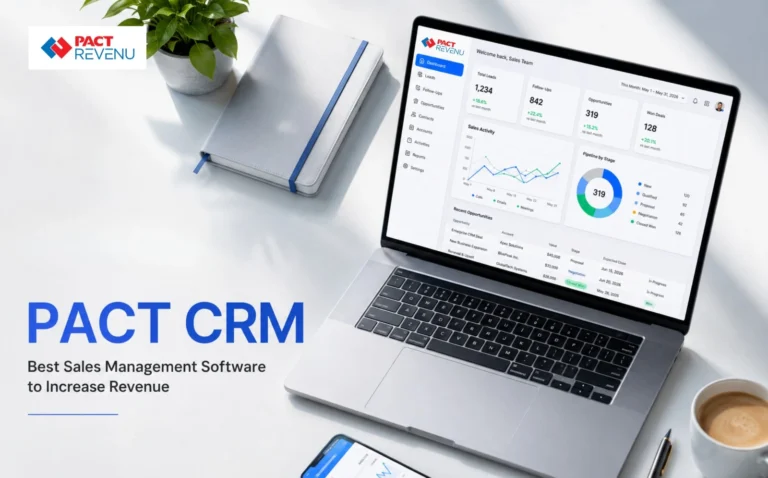
Sales Force Automation Software for Smarter Sales Management and Growth
A sales team can have good leads, experienced representatives, and a strong product, yet still lose opportunities because follow-ups are missed, customer information is scattered, or managers do not have a clear view of what is happening in the pipeline.
This becomes more noticeable as a business grows. Sales representatives may manage leads through spreadsheets, WhatsApp conversations, emails, notebooks, and separate applications. Managers then have to collect updates manually to understand pipeline progress and team activity.
Sales force automation software helps bring these activities into a more structured system. Instead of relying on individual reminders and disconnected records, businesses can organize leads, customer information, sales activities, opportunities, follow-ups, and reporting in one place.
For UAE businesses managing growing sales teams, field representatives, multiple locations, or relationship-driven B2B sales, this approach can make day-to-day sales management more consistent and easier to monitor.
What Is Sales Force Automation Software?
Sales force automation software is a technology solution that helps automate and organize routine sales activities across the sales cycle.
It can support processes such as lead management, contact management, follow-up scheduling, opportunity tracking, sales activity recording, reporting, and forecasting.
The purpose is not to replace salespeople. Human communication, negotiation, relationship building, and business judgment remain important. Automation reduces repetitive administrative work so sales representatives and managers can spend more time on meaningful customer interactions.
For example, when a new lead enters the sales pipeline, a structured sales system can help the team record the customer details, assign responsibility, schedule the next follow-up, track the opportunity, and maintain a history of interactions.
That creates a more reliable process than depending on memory or scattered spreadsheets.
Why UAE Businesses Need Smarter Sales Management
UAE businesses operate across a wide range of industries, from professional services and technology to real estate, distribution, manufacturing, construction, and other B2B sectors. Sales teams may also work across offices, branches, client locations, and field territories.
As the team grows, managing sales manually becomes harder.
Common challenges include:
- Leads sitting without timely follow-up
- Customer information spread across different tools
- Managers relying on manual sales updates
- Difficulty tracking field sales activities
- Limited visibility into individual opportunities
- Inconsistent follow-up practices
- Time-consuming sales reports
- Difficulty understanding the actual pipeline
- Forecasts based on incomplete information
A structured sales management approach gives managers a clearer picture of sales activity while helping representatives follow a consistent workflow.
This is particularly useful for businesses where several team members interact with prospects before an opportunity becomes a customer.
Key Benefits of Sales Force Automation Software
1. Centralize Lead and Customer Information
When customer details are stored in different spreadsheets, emails, and messaging conversations, representatives may struggle to find the information they need.
A centralized system keeps relevant lead and customer records organized. Salespeople can spend less time searching for previous interactions and more time preparing for the next conversation.
It also gives managers better visibility when they need to review an account or opportunity.
2. Reduce Missed Follow-Ups
A promising lead can quickly become inactive when nobody follows up at the right time.
Sales automation helps teams organize tasks, reminders, and next actions around opportunities. Instead of relying entirely on personal calendars or memory, representatives can work from a defined follow-up process.
This is especially useful when salespeople are managing multiple prospects simultaneously.
3. Improve Sales Pipeline Visibility
Managers need to know more than how many leads the team has.
They need to understand which opportunities are new, which are being qualified, which require action, and which are approaching a decision.
Sales pipeline management provides a structured view of these stages. This makes it easier to identify stalled opportunities and discuss specific actions with representatives.
4. Improve Sales Team Productivity
Administrative work can consume a significant part of a sales representative’s day.
Automating repetitive activities and maintaining organized records can reduce unnecessary manual work. Representatives can focus more attention on prospect conversations, meetings, proposals, negotiations, and relationship building.
Productivity is not simply about doing more activities. It is also about making sure time is spent on the activities that support the sales process.
5. Make Reporting More Consistent
Manual reporting often requires salespeople to prepare updates individually before managers can review them.
A centralized sales management system can provide structured activity and pipeline information. Depending on the system’s reporting capabilities, managers may be able to monitor lead movement, opportunity stages, activities, and team performance from dashboards or reports.
This creates a more consistent basis for sales discussions.
6. Support Better Forecasting
Sales forecasting becomes difficult when pipeline information is incomplete or outdated.
A structured sales process helps managers review opportunities according to their current stages, expected values, activities, and progress.
Forecasts still require human judgment. However, organized sales data gives managers better information to work with when reviewing future revenue opportunities.
7. Strengthen Team Accountability
Accountability becomes easier when responsibilities and sales activities are clearly recorded.
Managers can identify who owns a lead, what action is pending, and where an opportunity currently stands. This reduces ambiguity and makes sales reviews more focused.
Essential Features to Look for in Sales Management Software
Choosing software should start with the sales process rather than the feature list. A useful solution should address the way your team actually works.
Important capabilities may include:
Lead and Contact Management
The system should provide an organized way to capture, update, assign, and manage leads and customer information.
Opportunity and Pipeline Tracking
Look for clear visibility into opportunity stages, expected progress, ownership, and next actions.
Task and Follow-Up Management
Sales representatives should be able to manage follow-ups and important sales activities without depending entirely on separate reminder tools.
Sales Activity Tracking
Activity records can help managers understand whether opportunities are receiving appropriate attention and where additional action may be required.
Reporting and Dashboards
Reports should help answer practical management questions, such as:
- How many active opportunities are in the pipeline?
- Which leads require follow-up?
- Where are opportunities getting delayed?
- What activities are being completed?
- How is the sales pipeline progressing?
Forecasting Support
Forecasting tools can help sales leaders review pipeline information and plan resources based on available sales data.
Mobile Accessibility
For field sales teams, mobile access is an important consideration. Representatives may need to review customer information, update activities, or manage follow-ups while away from the office.
Integrations
Consider whether the software needs to connect with existing business applications, communication tools, accounting systems, or other platforms used by the sales team.
How Sales Force Automation Improves the Sales Process
A strong sales process should give representatives a clear path from the first interaction to the customer relationship that follows a successful sale.
Consider a typical journey:
Lead → Qualification → Follow-Up → Opportunity → Proposal → Closing → Customer Relationship
Without a structured system, information can become fragmented between these stages.
With sales automation, the team can establish defined processes for moving opportunities forward.
A new lead can be recorded and assigned. Qualification information can be captured. Follow-up activities can be scheduled. Once the lead becomes a genuine opportunity, the sales representative can track its progress through the pipeline.
When a proposal is submitted, the next action can be recorded instead of being left to memory. Managers can then review active opportunities and identify where support may be needed.
After closing, customer information remains available for future interactions, account management, or additional sales activities.
The exact workflow should depend on the company’s sales model. A solution should support that process rather than force every business into the same structure.
Choosing Sales Management Software in UAE
When evaluating sales management software in UAE, businesses should look beyond the number of features listed on a product page.
Start by documenting your current sales process. Identify where leads are coming from, how they are assigned, how follow-ups are handled, how managers receive updates, and where reporting currently takes the most time.
Then consider the following:
- Ease of adoption: Can representatives understand and use the system without creating unnecessary administrative work?
- Scalability: Can the solution support the business as the sales team and customer base grow?
- Mobile usability: Is it practical for representatives working from client locations?
- Reporting: Does it provide the information managers actually need?
- Workflow flexibility: Can the system support your existing sales process?
- Integration: Can it work with important business applications already in use?
- Data visibility: Can authorized team members access the information they need?
- Support: Is there a clear support process when users need assistance?
- Total cost of ownership: Have implementation, training, subscriptions, integrations, and ongoing requirements been considered?
The right choice depends on business requirements, team size, sales complexity, and existing technology.
How PACT REVENU Can Support Smarter Sales Management
PACT REVENU is relevant for businesses looking to bring greater structure to their sales management and automation processes.
A structured approach can help teams organize sales activities, maintain customer information, manage opportunities, monitor follow-ups, and improve visibility across the sales operation.
For UAE companies moving away from spreadsheets, disconnected communication channels, or manual reporting, the first step should be understanding where the current sales process creates delays or information gaps.
From there, businesses can evaluate how PACT REVENU and its sales management capabilities fit their specific workflows and operational requirements.
The goal should be practical: create a sales process that is easier for representatives to follow, easier for managers to monitor, and capable of supporting the organization’s growth.
Ready to bring more structure to your sales operations? Explore how PACT REVENU can support your sales management approach and help your UAE team build a more organized, visible, and scalable sales process.
Frequently Asked Questions
1. What is sales force automation software?
Sales force automation software helps businesses organize and automate routine sales activities such as lead management, follow-ups, opportunity tracking, activity management, reporting, and forecasting. It supports sales teams without replacing human customer relationships.
2. How does sales force automation improve sales productivity?
It can reduce repetitive administrative work, organize customer information, provide follow-up reminders, and give representatives clearer visibility into their active opportunities. This allows sales teams to spend more time on customer-facing activities.
3. What should businesses look for in sales management software in UAE?
UAE businesses should consider ease of use, mobile accessibility, pipeline management, reporting, integrations, scalability, workflow flexibility, data visibility, support, and total cost of ownership. Field sales requirements should also be considered where applicable.
4. Is sales force automation suitable for small and growing businesses?
Yes. Sales automation can be useful for growing businesses that are beginning to experience problems with spreadsheets, manual follow-ups, scattered customer information, or limited sales visibility. The important consideration is choosing a solution that matches current requirements while allowing room for growth.
5. How can PACT REVENU help with sales management?
PACT REVENU can be evaluated as a sales management and automation solution for organizing sales activities, customer information, opportunities, follow-ups, and sales visibility. Businesses should assess its capabilities against their specific workflows and operational requirements.