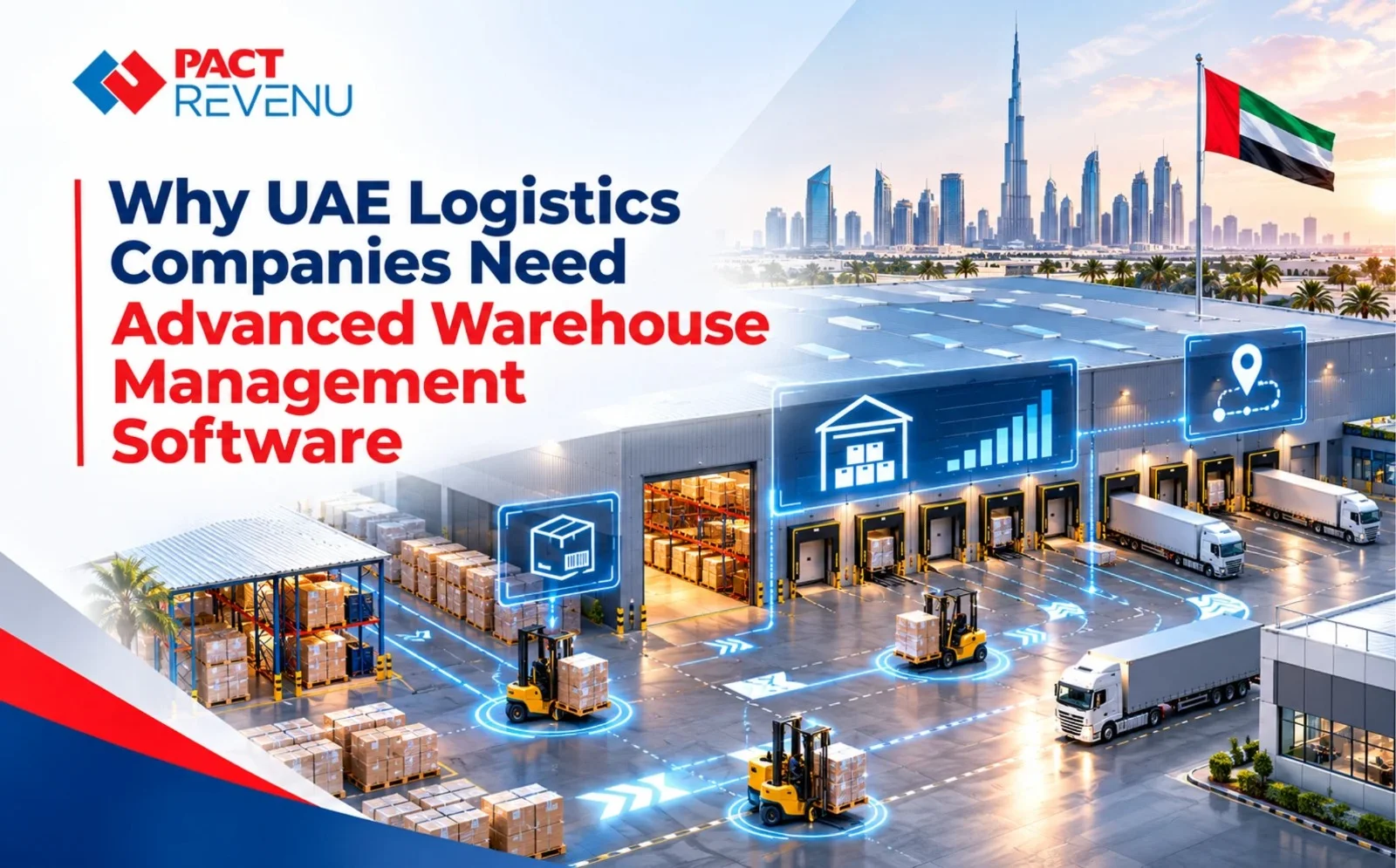
Why UAE Logistics Companies Need Advanced Warehouse Management Software
The UAE has become an important global logistics and distribution hub, connecting businesses across the Middle East, Asia, Europe and Africa. As e-commerce, international trade and regional distribution continue to evolve, logistics companies face increasing pressure to manage inventory accurately, process orders faster and deliver a consistent customer experience.
Traditional warehouse practices can struggle to keep up with these demands. Manual stock updates, misplaced products, delayed picking and limited inventory visibility can affect productivity and increase operating costs. This is where advanced Warehouse Management Software becomes valuable. It helps businesses organise warehouse activities, improve stock control and gain better visibility into daily operations.
For UAE logistics companies aiming to remain competitive, investing in modern warehouse technology is becoming an important step towards building a more efficient and scalable supply chain.
The Growing Importance of Warehouse Management in the UAE
The UAE’s strategic location, international trade connections, logistics infrastructure and expanding digital economy create significant opportunities for logistics and distribution businesses. However, growth also increases the complexity of warehouse operations.
Businesses must handle different product categories, fluctuating order volumes, multiple suppliers and increasingly demanding delivery schedules. E-commerce customers expect accurate orders and timely deliveries, while business clients require dependable inventory availability and efficient distribution.
An effective warehouse management system helps businesses coordinate these activities by providing better control over stock movement, storage locations and order processing.
Traditional spreadsheets and disconnected processes may work for smaller operations, but they become harder to manage as inventory volumes, product variations and warehouse locations increase. A structured digital approach helps businesses maintain operational accuracy while preparing for future expansion.
Common Warehouse Management Challenges Faced by UAE Logistics Companies
Warehouse inefficiencies can affect the entire supply chain, from purchasing and storage to order fulfilment and final delivery. Some common challenges include:
- Inventory inaccuracies: Differences between recorded and actual stock levels can lead to stockouts, overstocking and missed sales.
- Manual warehouse operations: Paper-based processes take additional time and increase the possibility of human error.
- Delayed order processing: Inefficient workflows can slow down picking, packing, dispatch and delivery preparation.
- Limited inventory visibility: Without updated stock information, managers may struggle to make reliable purchasing and replenishment decisions.
- Poor warehouse space utilisation: Unorganised storage arrangements can waste valuable space and increase product retrieval time.
- Picking and packing errors: Incorrect product selection or quantities can result in returns, customer complaints and additional handling costs.
- Increasing operational costs: Excessive labour, unnecessary movement and inventory discrepancies reduce warehouse profitability.
- Multiple warehouse management difficulties: Coordinating stock across different facilities becomes complicated without centralised information.
- Limited real-time reporting: Delayed operational reports make it difficult to identify problems and respond quickly.
Addressing these challenges requires more than improving individual tasks. Businesses need connected processes that provide accurate information throughout warehouse operations.
How Advanced Warehouse Management Technology Improves Logistics Operations
Modern Warehouse Management Software connects important warehouse activities through a centralised digital platform. Rather than relying on separate records and manual updates, employees can work with more consistent operational information.
Key improvements include:
- Real-time inventory tracking: Businesses can monitor stock quantities, product movements and storage locations more accurately.
- Automated warehouse processes: Routine activities such as stock updates and transaction recording can be streamlined.
- Improved order fulfilment: Organised picking, packing and dispatch workflows help teams process orders efficiently.
- Better stock control: Updated inventory information supports replenishment planning and reduces unnecessary stock accumulation.
- Fewer human errors: Barcode-based scanning and structured workflows reduce dependence on manual data entry.
- Efficient space utilisation: Location management helps teams organise products and make better use of available storage capacity.
- Greater operational visibility: Managers can monitor warehouse activities and identify bottlenecks.
- Better team coordination: Connected information helps receiving, storage, picking, packing and dispatch teams work together.
For example, when a warehouse receives a new shipment, employees can record incoming products, assign storage locations and update inventory records through a connected process. When an order arrives, the team can identify the required products and coordinate fulfilment using current stock information.
Essential Features Logistics Companies Should Look for in a Warehouse Management System
Choosing the right technology requires understanding the operational requirements of the business. A capable warehouse management system should support essential warehouse activities while allowing the operation to grow.
Important features include:
- Real-time inventory management: Provides updated information about stock quantities, movements and availability.
- Barcode and RFID integration: Supports faster product identification and more accurate inventory transactions.
- Order picking and packing management: Helps organise picking activities, verify products and prepare orders for dispatch.
- Automated stock replenishment: Helps identify when inventory needs replenishing based on defined stock levels.
- Warehouse location management: Makes it easier to assign storage locations and retrieve products.
- Reporting and analytics: Provides operational insights into inventory movement, order fulfilment and warehouse performance.
- ERP and logistics system integration: Supports information exchange between warehouse operations and other business functions.
- Multi-warehouse management: Helps businesses coordinate inventory across multiple facilities.
- Scalability and customisation: Allows the technology to accommodate changing workflows, inventory volumes and business requirements.
Businesses evaluating warehouse management wms solutions should prioritise practical functionality, integration requirements, ease of use and long-term suitability rather than selecting technology based only on the number of features.
Best Practices for Implementing Advanced Warehouse Management Solutions
Successful implementation depends on aligning technology with actual warehouse requirements. Before introducing new systems, logistics companies should consider these practical steps:
- Evaluate existing warehouse operations: Review receiving, storage, picking, packing and dispatch processes to identify inefficiencies.
- Identify business-specific requirements: Define the operational problems the technology should address.
- Choose scalable technology: Select a solution that can support future inventory growth and additional warehouse locations.
- Integrate existing business systems: Consider connections with ERP, accounting, order management and transportation platforms.
- Train warehouse employees: Ensure employees understand system workflows and can use the technology confidently.
- Monitor inventory accuracy: Conduct regular stock checks and investigate discrepancies.
- Automate repetitive processes: Prioritise routine activities that consume time or create avoidable errors.
- Track key performance indicators: Monitor metrics such as order accuracy, inventory accuracy, picking productivity and order cycle time.
- Review system performance regularly: Assess whether the implementation continues to meet operational requirements.
A phased implementation can also help businesses introduce new workflows gradually, identify issues early and minimise disruption to daily warehouse activities.
Why UAE Businesses Should Invest in Modern Warehouse Management Solutions
Investing in modern warehouse technology is a strategic business decision, not simply an upgrade to existing software. It can improve how companies manage resources, serve customers and respond to changing supply chain demands.
The right warehouse management system software can support long-term operational efficiency by reducing avoidable manual work and improving inventory visibility. More accurate stock information also helps businesses make better purchasing decisions and reduce the risks associated with excess or insufficient inventory.
Faster, more organised fulfilment can improve customer satisfaction by reducing order discrepancies and helping teams meet delivery commitments. Meanwhile, operational reporting gives managers useful information for identifying inefficiencies, allocating resources and planning improvements.
For growing UAE businesses, these capabilities can support expansion into new markets, additional distribution channels and larger warehouse operations without relying entirely on manual processes.
Ultimately, the value comes from building a warehouse operation that is more controlled, measurable and adaptable to business growth.
How PACT REVENU Supports Smarter Warehouse Operations
Modern logistics operations require technology that addresses real business challenges rather than adding unnecessary complexity. PACT REVENU recognises the importance of efficient warehouse processes, accurate inventory information and better operational coordination in today’s competitive logistics environment.
Businesses exploring warehousing software and warehouse management systems should consider how a technology solution aligns with their existing workflows, integration needs, inventory requirements and future objectives.
PACT REVENU encourages logistics businesses to take a structured approach to evaluating their warehouse technology requirements. Understanding current operational gaps is an important starting point when identifying suitable solutions.
Whether a business wants to improve inventory visibility, streamline warehouse workflows, or prepare for operational expansion, selecting an appropriate technology approach can help establish a stronger foundation for supply chain performance.
Conclusion
UAE logistics companies operate in an increasingly demanding business environment where inventory accuracy, timely fulfilment and operational efficiency directly influence customer satisfaction and business performance.
Adopting advanced Warehouse Management Software can help organisations reduce manual processes, improve stock visibility, coordinate warehouse activities and make more informed operational decisions. With the right implementation strategy, warehouse technology can also support long-term productivity and business expansion.
PACT REVENU encourages logistics companies, warehouse operators and supply chain decision-makers to evaluate their current processes and explore opportunities to modernise warehouse operations.
Ready to improve your warehouse operations? Connect with PACT REVENU to discuss your warehouse management requirements and explore suitable technology solutions for your business.
Frequently Asked Questions (FAQs)
1. What is warehouse management software?
It is a digital solution that helps businesses manage warehouse activities such as receiving, storing, tracking, picking, packing and dispatching products. It provides better inventory visibility, supports organised workflows and helps warehouse teams improve operational accuracy.
2. Why do UAE logistics companies need a warehouse management system?
UAE logistics companies manage complex supply chains, growing inventory volumes and demanding fulfilment schedules. A digital system helps coordinate warehouse activities, improve stock accuracy, reduce manual work and provide better visibility into inventory and order processing.
3. What features should businesses look for in warehouse management software?
Important features include real-time inventory tracking, barcode or RFID integration, order fulfilment management, automated replenishment, warehouse location management, reporting, ERP integration and multi-warehouse support. Businesses should also consider scalability and ease of implementation.
4. Can warehouse management technology reduce operational costs?
Yes. It can help reduce avoidable labour, inventory discrepancies, picking errors, unnecessary product movement and inefficient storage practices. Actual savings depend on warehouse size, existing processes, implementation quality and how effectively employees use the system.
5. How can PACT REVENU help businesses improve warehouse operations?
Businesses can approach PACT REVENU to discuss their warehouse management requirements and explore suitable technology solutions. Evaluating existing workflows, inventory challenges, integration needs and future growth plans can help identify the right direction for warehouse modernisation.